Fertilizers are food for plants: they provide nutrients for plants to grow and thrive.
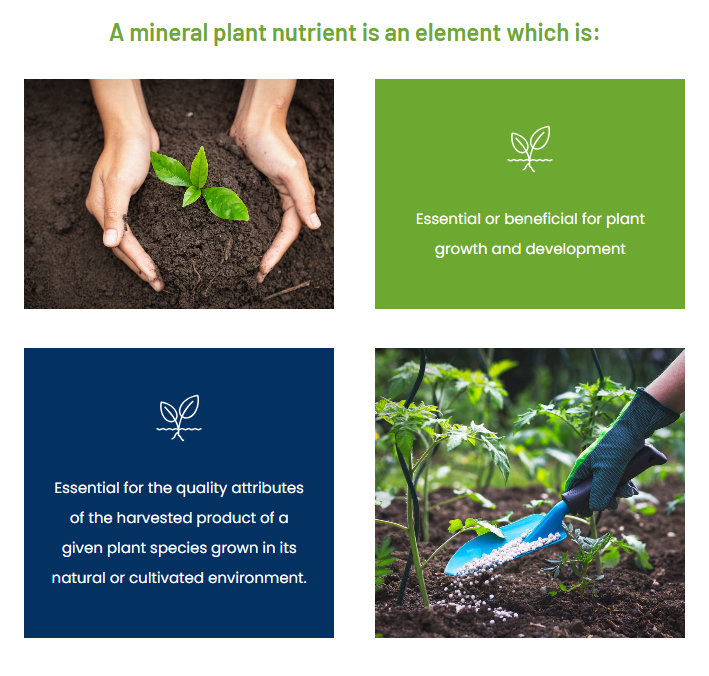
In addition to carbon, hydrogen and oxygen, which they get from the atmosphere and water, plants need numerous essential nutrients for their growth and health, which fertilizers provide:
Nitrogen (N), phosphorus (P) and potassium (K) are the primary nutrients in commercial fertilizers.
Other plant nutrients are sulfur (S), magnesium (Mg), calcium (Ca), zinc (Zn), iron (Fe), boron (B), manganese (Mn), copper (Cu), molybdenum (Mo), chlorine (Cl), nickel (Ni), iodine (I). Additional plant nutrients are required by a few plant species, e.g., sodium (Na) and cobalt (Co).
Mineral fertilizers play an essential role in our food systems: it increases the volume of food that can be grown on a fixed amount of land.
Approximately half the food we eat today has been produced thanks to mineral fertilizer.
For more information about fertilizers and the vital role they play in agriculture, visit the main IFA website.
IFA also runs a global e-learning platform, the Sustainable Fertilizer Academy (SFA), designed to build sustainability knowledge across the fertilizer value chain. Through expert-led courses, the Academy equips industry professionals, agronomists, policymakers, and students with practical insights on sustainable fertilizer production and nutrient management.